

Учествујте
Драго нам је да видимо да доприносите Zammad-у! Можете помоћи на неколико начина. Доприноси се углавном обављају тако што се направи fork једног од наших репозиторија на GitHub-у и отвори pull request са вашим изменама (осим за преводе, погледајте испод за детаље). 🚀
Можете допринети:
Please have a look at our the sections below about how to contribute. All repos can be found on GitHub.
Изворни код Zammad-а
Изворни код Zammad-а можете пронаћи на GitHub-у у Zammad репозиторијуму. Прочитајте уџбеник за програмере за почетак.
Подржани огранци/верзије
Zammad's GitHub repository has several branches:
develop
- Ово је тренутно (необјављено) развојно стање следећег већег издања (постаће нови
stableогранак). - Не користите у продукцији!
- This branch is actively supported and receives regular bug fixes and security updates (see Security Policy for more details).
stable
- Ово је тренутно стабилно издање, нпр. Zammad 5.2.
- Користите овај огранак за инсталације у продукцији.
- This branch is actively supported and receives regular bug fixes and security updates (see Security Policy for more details).
stable-x.y
- Ово су огранци старих Zammad издања као
stable-5.1за Zammad 5.1. - Не користите у продукцији!
- Исправке грешака и сигурносних пропуста се не примењују на ове огранке.
Документација
The documentation you are reading is available on zammad.org and next.zammad.org and is built with VitePress. The source files are written in Markdown. Make sure to change the English source files only which are placed under /src/en/. The translation is done via Weblate and will overwrite any changes in the language specific folders (except /src/en/).
Отворите нови GitHub pull request на https://github.com/zammad/zammad-org (заснован на develop огранку) са вашим изменама и обавезно испратите водич кроз стил и садржај. Узмите у обзир и инструкције у README.md датотеци репозиторија.
Превод
If you want to help us with translation and improve the multi-language support of Zammad or the documentation, you are welcome to contribute as well! The translation of Zammad and the documentation is done via Weblate, which is a service for the collaborative translation of projects. Just head over to Zammad's Weblate instance. You can either create an account (if you don't have one already) or even sign in with your GitHub account!
We will cover some basic steps in the following sections to get you started with translating. However, if you want to use some additional features of Weblate and want to dive deeper into it, their translation documentation is a good starting point.
Основе
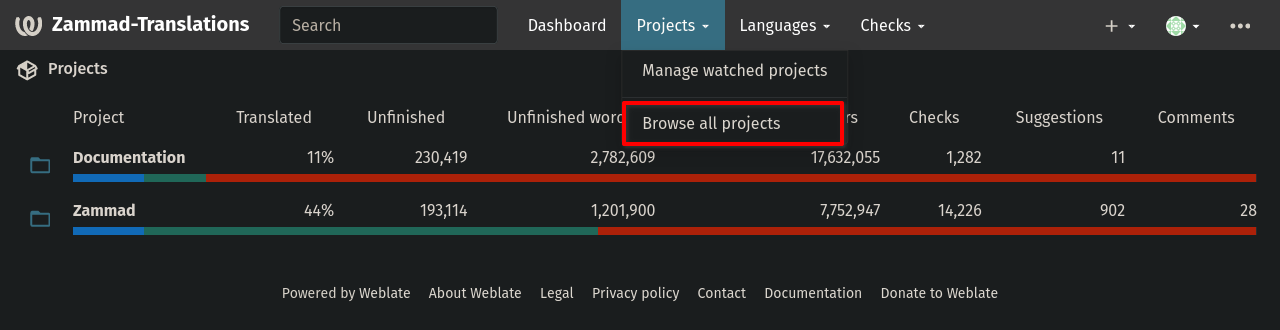
Превод Zammad-а и документације су раздвојени у различите пројекте у Weblate апликацији. Преглед пројеката можете пронаћи кликом на мени при врху под Projects > Browse all projects:
Структура пројекта превода у Weblate-у:
- Документација
- Нова документација на next.zammad.org
- Нова документација на next.zammad.org
- Zammad
- Zammad (
develop, развојна верзија) - Zammad (
stableверзија) - Додатне верзије које овде нису релевантне
- Zammad (
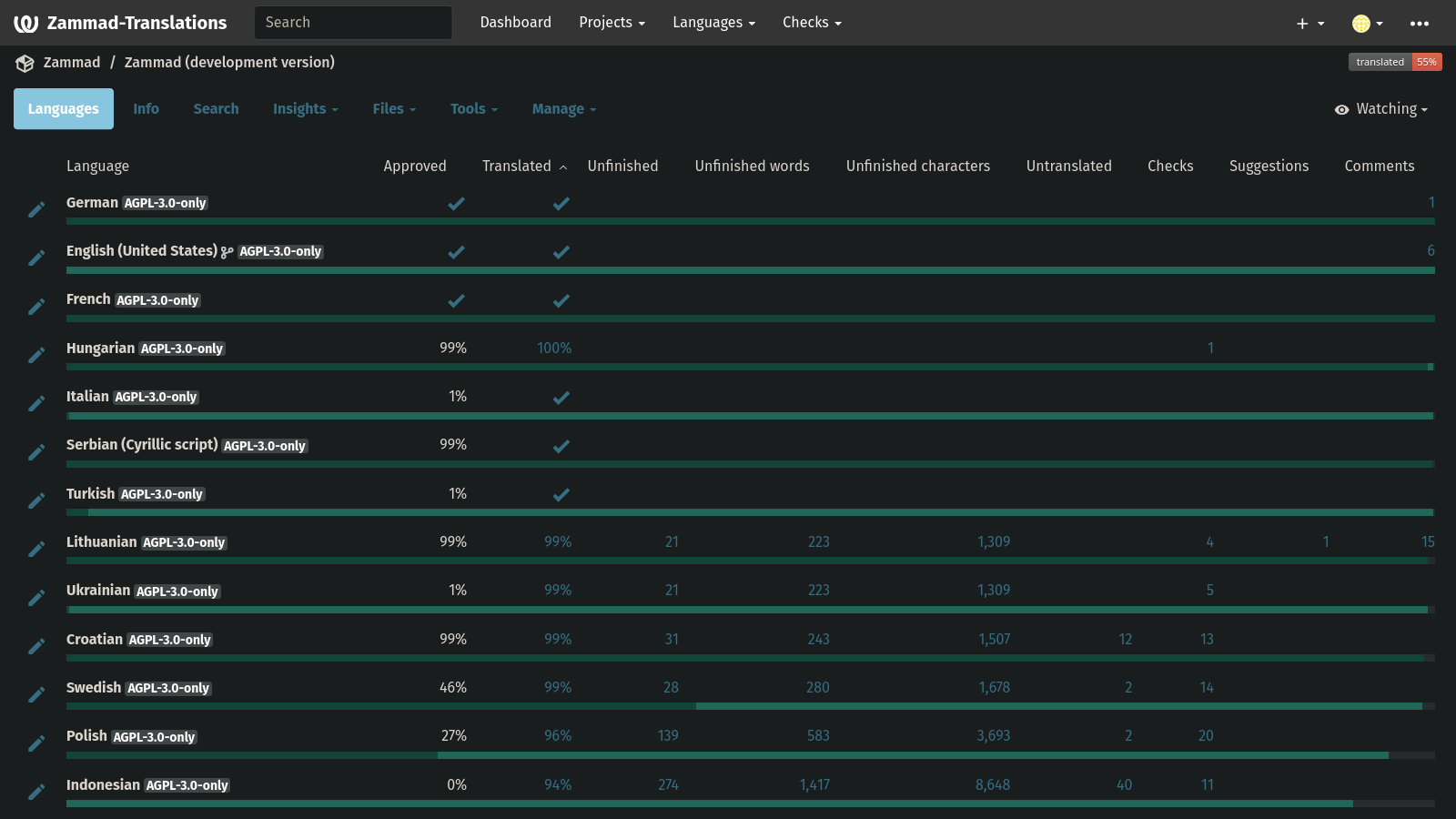
Одаберите пројекат (документације или Zammad-а) и пређите на језичак Components. Одаберите ону коју желите да преведете. Након тога, можете видети статус превода по различитим језицима, по узору на следећи снимак екрана:
TIP
Одлука у ком огранку желите да преводите не прави велику разлику. Када Weblate детектује идентичне низове текста у различитим компонентама користиће исти превод за све огранке и тиме се преводи само једном. Уколико нисте сигурни, одаберите develop верзију.
Превођење
Сада проверите „Unfinished” колону вашег језика и кликните на број из ње. Ово ће отворити први непреведен низ текста, и можете започети са преводом. Али прво, кратак преглед корисничког интерфејса Weblate апликације:
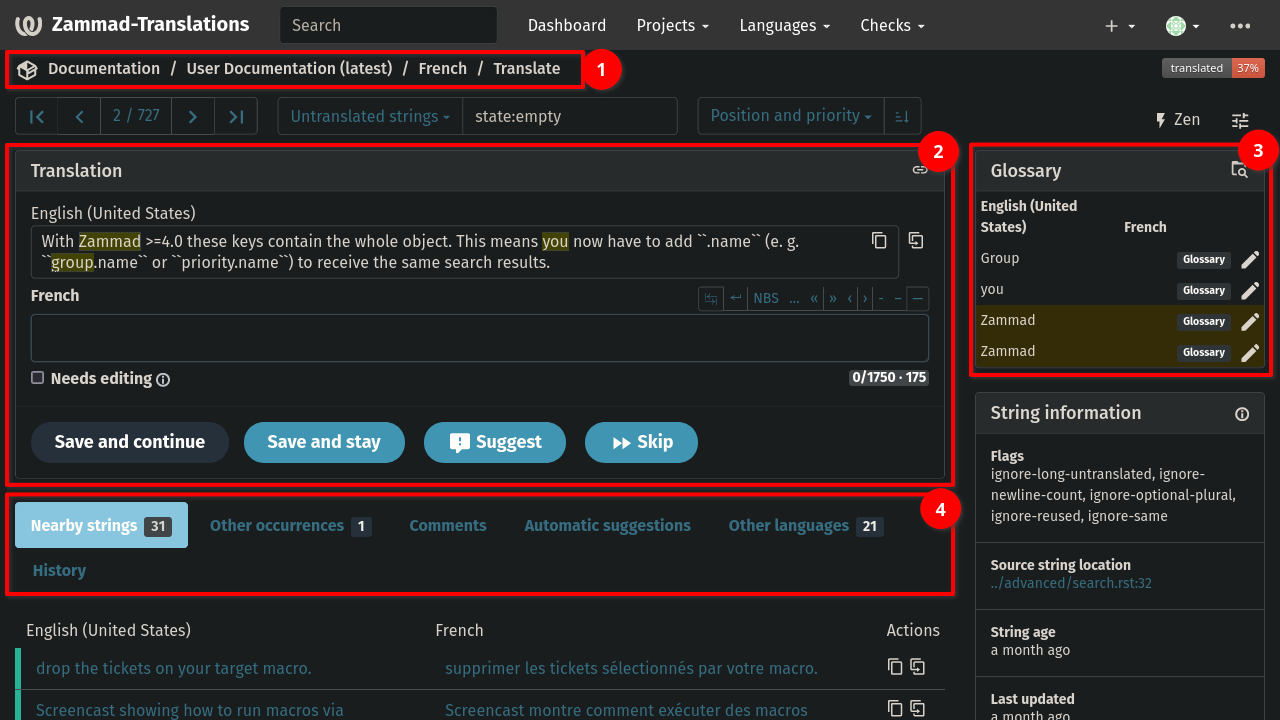
- Путања навигације на тренутни пројекат, компоненту и језик превода
- Сам Translation одељак. Можете видети изворни низ текста при врху и поље за унос вашег превода испод њега.
- Glossary: када се у низу текста или његовим деловима детектује нешто из речника, овде можете пронаћи додатне информације. Такође, биће назначено у изворном низу текста.
- Неке корисне картице:
- Nearby strings: вам приказује контекст речи или низа текста
- Automatic suggestions: овде можете пронаћи аутоматизоване предлоге од DeepL сервиса и предлоге на основу сличног текста, који је већ преведен. Користите дугме
Clone to translationда убаците текст у поље превода и снимите измене. Користите дугмеAcceptда прихватите предложен превод и одмах пређете на следећи низ текста. - Other languages: овде можете добити листу где и како је низ текста преведен на другим језицима (може бити корисно за сличне језике).
Ознаке у тексту
Find some examples for special source strings below with a badge indicating where such a string can be found. Try to keep the (adjusted) markup and make sure to keep the variables. The Source string location section in Weblate (on the right side) gives you a hint where to search for the context. Also have a look at the style guide of the documentation where you can find more information about the syntax and the usage of Markdown/VitePress features.
%s created ticket |%s|Zammad- Текст садржи променљиве (
%s) и ознаке (||). Обратите пажњу да се променљива и ознаке нађу у преводу. Тачна позиција може зависити од превода. `example-string`Documentation- Ово ће бити приказано као линијски кôд (
example-string). У зависности од контекста, ово се може превести или не. У сваком случају, користите задње наводнике (`) пре и после низа текста у вашем преводу. [example](/en/path/to/document-or-website)Documentation- Ово је линк на другу страницу, укључујући и код језика. Текст „example” изнад биће приказан као текст линка. Овај део можете превести. Што се тиче путање, само замените
enса кодом језика на који преводите. Обратите пажњу да ли је ваш језик већ омогућен на zammad.org (проверите преко избора језика). У супротном обратите нам се уколико желите да омогућимо ваш језик. **пример текста**Документација- Ознака за текст (нпр. подебљано, курзив). Алтернатива:
_пример текста_. Начелно задржите ознаке, али их прилагодите тако да значење остане исто.